
Introduction
Choosing the right chemical storage tank is not a decision to rush. A poorly matched tank can mean leaks, chemical degradation, safety hazards, or a replacement bill within a couple of years. If you are sourcing chemical storage tanks for a water treatment plant, a pharmaceutical facility, or an industrial processing unit in Mumbai, the manufacturer you choose matters just as much as the tank itself.
This guide walks through ten established manufacturers of plastic chemical storage tanks and FRP tanks serving Mumbai and the wider Maharashtra industrial belt. We look at what each one actually offers, where they fit best, and what to check before you place an order. Whether you need plastic chemical tanks for mild acids or stainless steel vessels for high purity applications, this comparison is built to help you make a confident, informed choice.
Table of Contents
- Top 10 Chemical Storage Tanks Manufacturers
- How to Choose the Right Chemical Storage Tank
- Common Buying Mistakes
- Maintenance Best Practices
- Quick Comparison Summary
- Conclusion
- FAQs
Top 10 Chemical Storage Tanks Manufacturers
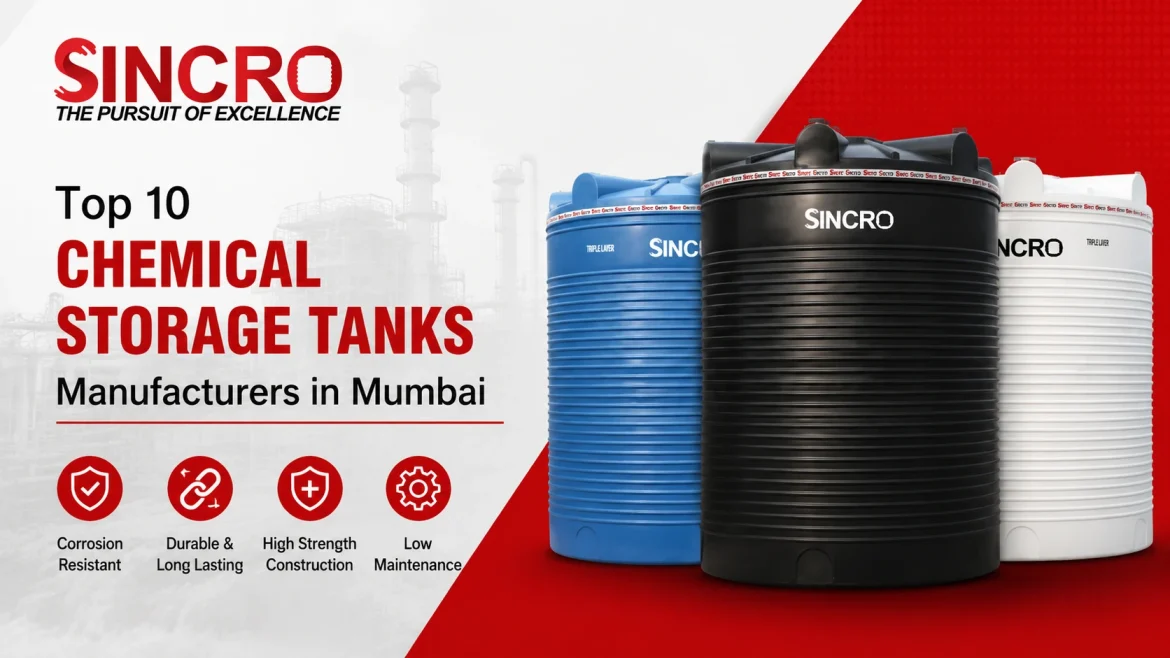
1. Sincro
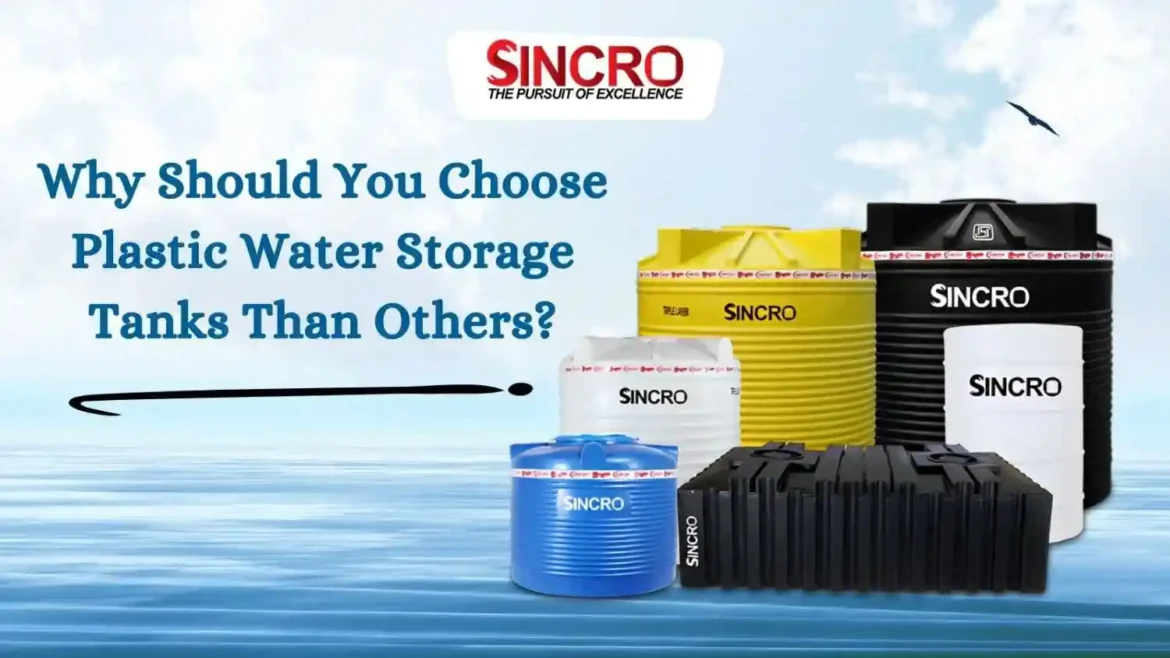
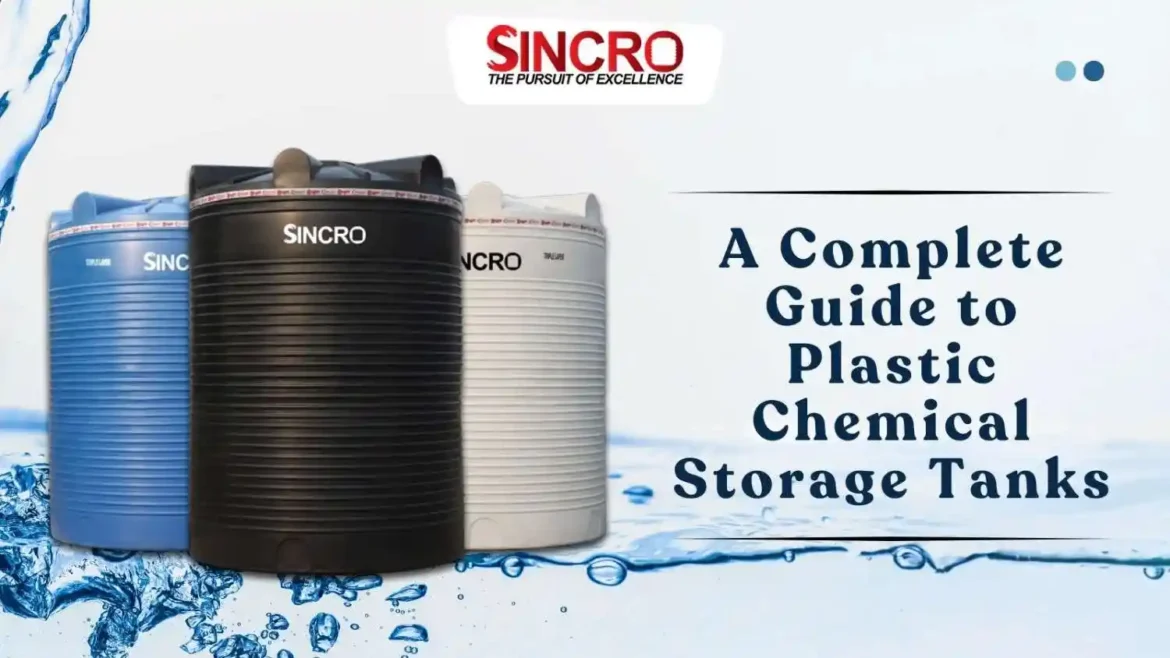
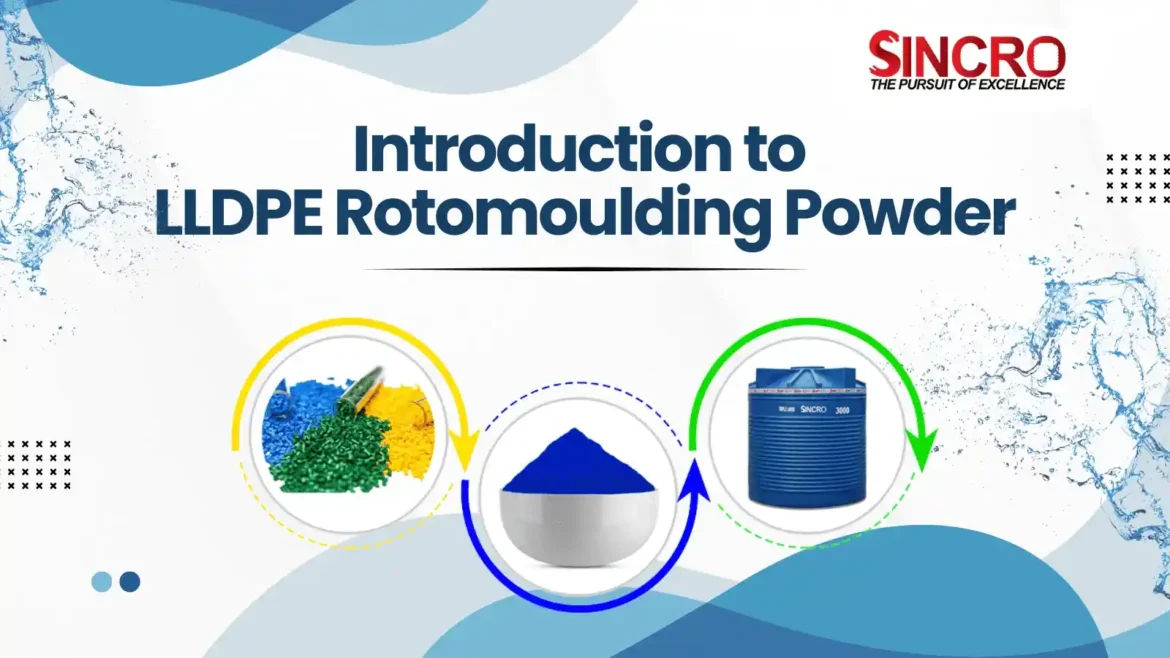
Overview Sincro manufactures rotationally molded chemical storage tanks built from UV stabilized, food grade HDPE and LLDPE. The seamless, one piece construction is designed specifically to reduce leak points, which matters when tanks hold industrial chemicals for years at a stretch.
Key Features
- Vertical tanks available across multiple capacities
- Food grade polyethylene construction
- Seamless one piece rotational molding
- UV stabilized for outdoor installation
Best For Water treatment plants, chemical manufacturing units, pharmaceutical facilities, textile industries, and fertilizer plants that need dependable, corrosion resistant storage.
Advantages: The single piece build lowers the risk of seam failure over time, and the food grade material makes these plastic chemical storage tanks suitable even where product purity matters. UV stabilization also means less material degradation for tanks kept outdoors.
Possible Limitations As with most polyethylene tanks, chemical compatibility should always be confirmed before storing highly aggressive or high temperature chemicals.
Maintenance Tips Periodic visual inspection for surface stress marks and keeping vents clear will extend service life considerably.
Why It Stands Out Sincro‘s combination of seamless molding and food grade material makes it a strong starting point for buyers comparing chemical storage tanks manufacturer Mumbai options, particularly where reliability over many years is the priority.
2. Deepak Plasto Industries Pvt Ltd
Based in Tarapur MIDC, Deepak Plasto Industries builds thermoplastic process equipment and dual laminate tanks that combine polypropylene or PVDF with FRP reinforcement.
Key Features
- Dual laminate construction (thermoplastic plus FRP)
- PP, HDPE, and PVDF material options
- Engineered for highly corrosive chemicals
Best For Facilities handling pickling acids, electroplating solutions, or hazardous effluents that demand superior chemical resistance beyond standard polyethylene.
Advantages: The dual laminate approach gives you the chemical resistance of thermoplastics with the structural strength of FRP, which is valuable for aggressive industrial processes.
Possible Limitations Specialized construction typically means longer lead times and a higher price point than standard polyethylene tanks.
Maintenance Tips Inspect the laminate bond lines periodically, especially in tanks exposed to temperature fluctuations.
Why It Stands Out Few manufacturers offer this level of material engineering for genuinely hazardous chemical storage.
3. Simplex Plast
Overview Simplex Plast, located in Vasai East, manufactures seamless rotationally molded tanks using LLDPE and cross linked polyethylene, with thick wall construction for outdoor durability.
Key Features
- Thick wall, UV stabilized construction
- Capacities extending up to 25,000 litres
- Cross linked polyethylene option for added strength
Best For Water treatment chemicals, light acids, and liquid fertilizers, especially where large storage volumes are required.
Advantages: The thick wall design adds impact resistance, and the high capacity range suits larger industrial operations without needing multiple smaller tanks.
Possible Limitations Larger tanks require adequate foundation and space planning before installation.
Maintenance Tips Check structural supports regularly on higher capacity units, particularly after seasonal temperature shifts.
Why It Stands Out The 25,000 litre capacity ceiling makes Simplex Plast a practical option when consolidating storage into fewer, larger units.
4. Blowtech Engineers Private Limited
Overview Blowtech Engineers, based in the Mumbai Metropolitan Region, produces FRP and PP FRP tanks built for acid dosing systems and bulk chemical handling.
Key Features
- FRP and PP FRP construction
- Suitable for Hydrochloric Acid, Sulfuric Acid, and similar corrosives
- Optional ladders, level indicators, and structural supports
Best For Chemical processing plants that store strong acids and need accessories built into the tank design.
Advantages The optional accessories reduce the need for third party fabrication, simplifying installation and site safety compliance.
Possible Limitations FRP tanks generally need careful handling during transport to avoid surface damage.
Maintenance Tips Inspect level indicators and ladder fittings periodically to confirm they remain securely mounted.
Why It Stands Out The built in accessory options make Blowtech a convenient choice for plants that want a more complete, ready to install system.
5. Fibre Plast
Overview Fibre Plast, operating out of Andheri East, manufactures custom engineered polypropylene FRP tanks for industrial chemical processing.
Key Features
- Custom vertical and horizontal tank configurations
- PPFRP construction
- Resistance to thermal stress and aggressive chemicals
Best For Blending operations and raw material storage where thermal resistance is a priority.
Advantages Custom engineering means the tank geometry can be matched precisely to plant layout constraints, which is useful in retrofitted facilities.
Possible Limitations Custom builds typically require more detailed upfront specification and a longer design phase.
Maintenance Tips Monitor thermal stress zones, particularly near inlet and outlet fittings, during routine checks.
Why It Stands Out The horizontal configuration option is less common among manufacturers on this list and useful for space constrained sites.
6. Pioneer Industrial Products
Overview Pioneer Industrial Products supplies stainless steel chemical storage vessels along with LLDPE lined tanks for specialty chemicals and solvents.
Key Features
- Stainless steel vessel construction
- LLDPE lining options
- Designed for solvents and process liquids
Best For Industrial environments handling specialty chemicals that require a metal vessel rather than a plastic tank.
Advantages Stainless steel offers strong durability and structural rigidity for demanding industrial settings.
Possible Limitations Metal tanks generally cost more upfront than polyethylene alternatives and need corrosion checks over time.
Maintenance Tips Inspect welds and linings periodically, particularly where solvents are stored long term.
Why It Stands Out The combination of steel strength with lined protection gives buyers flexibility between two storage approaches.
7. Scoya Pharmatech
Overview Scoya Pharmatech manufactures hygienic stainless steel tanks in SS304, SS316, and SS316L grades for pharmaceutical, food processing, and specialty chemical use.
Key Features
- Multiple stainless steel grade options
- Electro polished interiors
- Hygienic design standards
Best For Pharmaceutical and food processing facilities where contamination control is non negotiable.
Advantages Electro polished interiors reduce surface irregularities where residue or bacteria could otherwise collect.
Possible Limitations This level of hygienic finishing is generally unnecessary, and costlier, for standard industrial chemical storage.
Maintenance Tips Follow standard cleaning validation protocols appropriate to pharmaceutical or food grade use.
Why It Stands Out Few manufacturers on this list specialize as specifically in hygienic, contamination sensitive storage.
8. DPL Valves & Systems Private Limited
Overview DPL Valves & Systems designs precision stainless steel process and storage tanks for industrial fluid handling.
Key Features
- Stainless steel process tank design
- Support for high temperature and pressure conditions
- Mixing and storage capability
Best For Applications where storage and active processing, such as mixing, happen within the same vessel.
Advantages Combining process and storage functions in one tank can simplify plant layout and reduce transfer piping.
Possible Limitations Process tanks with mixing capability are typically more complex to install and service than simple storage tanks.
Maintenance Tips Schedule regular checks on seals and fittings exposed to pressure or temperature cycling.
Why It Stands Out The dual purpose design suits facilities looking to streamline both storage and processing infrastructure.
9. Metal Plants India Pvt Ltd
Located in Ambernath MIDC, Metal Plants India manufactures heavy duty stainless steel and carbon steel storage tanks, reactors, and pressure vessels.
Key Features
- Stainless steel and carbon steel construction
- Bulk storage tank and reactor manufacturing
- Built for demanding manufacturing environments
Best For Large scale manufacturing operations needing bulk storage alongside reactors or pressure vessels from a single supplier.
Advantages Sourcing storage tanks and process vessels from one manufacturer can simplify vendor coordination on larger projects.
Possible Limitations Carbon steel options require more diligent corrosion protection than stainless steel or plastic alternatives.
Maintenance Tips Monitor for corrosion on carbon steel units and reapply protective coatings as needed.
Why It Stands Out The ability to supply both storage tanks and pressure vessels makes Metal Plants India a practical choice for larger industrial projects.
How to Choose the Right Chemical Storage Tank
Start with chemical compatibility. Not every tank material handles every chemical safely, so confirm compatibility with the manufacturer before anything else. From there, consider:
- Capacity needs based on current and near future volume, not just today’s requirement
- Installation environment, since outdoor tanks need UV stabilization and structural support
- Material type, weighing polyethylene, FRP, or stainless steel against your chemical and budget requirements
- Regulatory and safety compliance relevant to your industry
- Long term maintenance access, including inspection ports and fittings
Buyers researching plastic chemical storage tanks Mumbai options should also factor in delivery logistics, since tank size can affect transport and site access.
Common Buying Mistakes
Many buyers focus only on upfront price and overlook chemical compatibility testing, which can lead to premature tank failure. Others underestimate future capacity needs and end up purchasing a second tank within a few years. Skipping a site visit or installation assessment is another frequent misstep, particularly for larger tanks that need proper foundation support.
Maintenance Best Practices
Routine visual inspections, checking for surface stress or discoloration, go a long way toward extending tank life. Keep vents and fittings clear of debris, and follow the manufacturer’s guidance on chemical exposure limits. For stainless steel tanks, monitor for early signs of corrosion, especially around welds.
Quick Comparison Summary
| Manufacturer | Primary Material | Best Suited For |
| Sincro | HDPE, LLDPE | Water treatment, pharma, textile, fertilizer |
| Deepak Plasto Industries | PP, HDPE, PVDF, FRP | Highly corrosive acids and effluents |
| Simplex Plast | LLDPE, XLPE | Large volume liquid fertilizer and light acid storage |
| Blowtech Engineers | FRP, PP FRP | Acid dosing and bulk chemical handling |
| Fibre Plast | PPFRP | Blending operations, raw material storage |
| Pioneer Industrial Products | Stainless Steel, LLDPE lined | Specialty chemicals and solvents |
| Scoya Pharmatech | SS304, SS316, SS316L | Pharma and food grade hygienic storage |
| DPL Valves & Systems | Stainless Steel | Combined mixing and process storage |
| Metal Plants India | Stainless Steel, Carbon Steel | Bulk storage, reactors, pressure vessels |
Conclusion
The right chemical storage tanks manufacturer depends heavily on what you are storing, where, and at what scale. For buyers prioritizing seamless, food grade plastic chemical tanks with proven reliability, Sincro remains a strong option to shortlist alongside the specialized FRP and stainless steel manufacturers covered here. Take the time to confirm chemical compatibility and installation requirements before you commit, since the right tank should serve your facility reliably for many years.
FAQs
1. What is the difference between plastic and FRP chemical storage tanks?
Plastic tanks, like HDPE or LLDPE, suit general chemical storage and are cost effective. FRP tanks offer stronger resistance to highly corrosive chemicals but generally cost more.
2. How long do chemical storage tanks typically last?
Service life depends on material, chemical exposure, and maintenance, but well maintained polyethylene or FRP tanks can last many years with proper care.
3. Can one tank store multiple types of chemicals?
No. Always use dedicated tanks per chemical type to avoid dangerous reactions and material degradation.
4. Do outdoor tanks need special features?
Yes, outdoor tanks should be UV stabilized to prevent material degradation from sun exposure over time.
5. How do I know which capacity tank I need?
Base capacity on your current usage plus reasonable growth projections, and consult the manufacturer if you are unsure about sizing.