

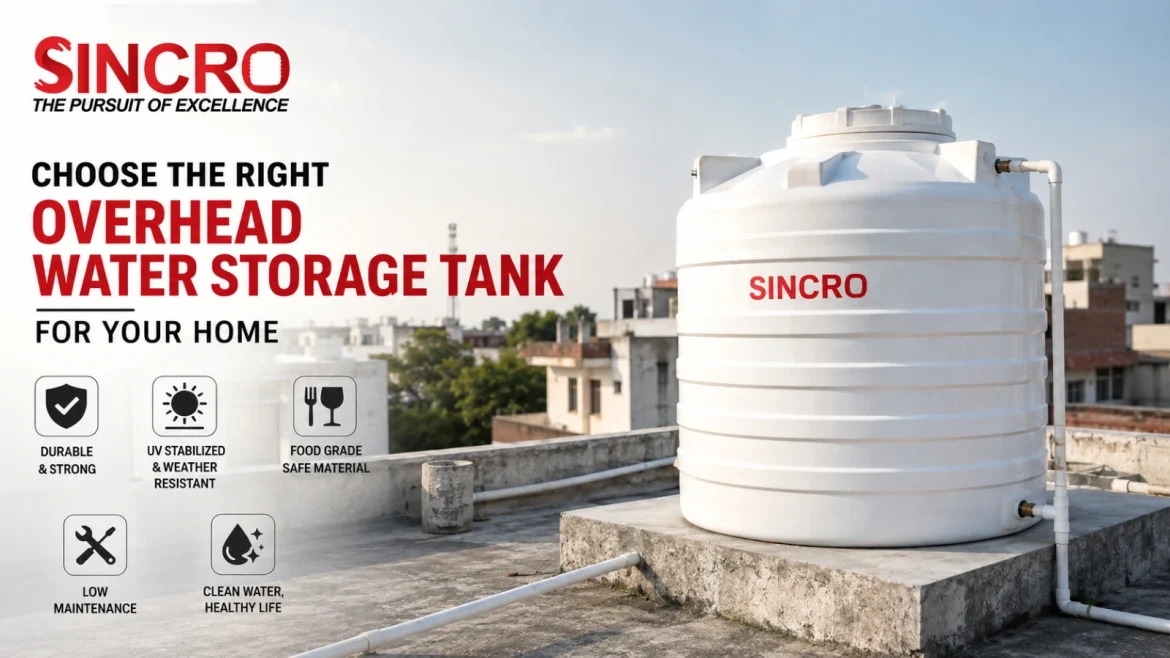
Most households only start thinking seriously about their water tank once the old one starts leaking, cracking, or falling short during peak summer demand. By then, the decision gets rushed. An overhead water storage tank is one of the few home fittings that quietly runs in the background for years, so it deserves a bit more thought before purchase.
This guide walks through what actually matters when selecting a tank for residential use, from sizing it correctly to checking build quality.
What Is an Overhead Water Storage Tank?
An overhead water storage tank is a container installed above ground level, typically on a rooftop or terrace, used to store water for household consumption. Gravity pushes water down through the plumbing, so pressure at taps and showers depends heavily on how the tank is positioned and how well it holds water without leakage.
This is different from underground sumps, which store water but need a pump to lift it for daily use. A rooftop water tank feeds the house directly, which is why most independent homes and low-rise buildings in India rely on this setup as their primary or secondary water storage solution.
Why an Overhead Water Storage Tank Matters for a Home
Water supply in most residential areas isn’t continuous. Municipal supply often runs on a schedule, sometimes just an hour or two a day, and a household water tank bridges that gap by holding a reserve. Without adequate overhead storage, families end up scheduling their day around water availability.
There’s also the pressure factor. A tank placed at height gives consistent flow to upper floors and outlets that would otherwise struggle with weak municipal pressure. For homes with borewells or tanker-dependent supply, a properly sized tank also reduces how often water needs to be pumped or ordered.
How to Choose the Right Water Tank Capacity
Getting the capacity wrong is the single most common mistake buyers make. A tank that’s too small runs dry before the next supply cycle; one that’s oversized wastes rooftop space and adds unnecessary structural load.
Consider Household Size
A rough starting point used across the industry is around 100 to 150 litres per person per day, though this varies with lifestyle and the number of bathrooms. A family of four would typically need a tank in the 1,000 to 1,500 litre range as a baseline, adjusted for actual habits rather than applied blindly.
Consider Daily Water Consumption
Beyond headcount, think about what draws the most water in your home. Homes with multiple bathrooms, a kitchen garden, or a car washed regularly will consume more than a household of the same size with simpler usage patterns. Tracking usage for a week or two before finalising a size is a useful exercise.
Consider Water Availability and Supply Schedule
If municipal water arrives daily, you can size the tank closer to daily need. If supply is irregular, or dependent on tankers, it makes sense to size up so the household isn’t caught short between refills. This factor often influences the right capacity more than household size alone.
What to Look for When Buying Water Storage Tanks
Once capacity is settled, the next decision is build quality. This is where most of the long-term value or long-term frustration comes from.
Material and Construction
Most residential tanks today use layered plastic construction designed to block sunlight and prevent algae growth inside. The number of layers and the quality of raw material directly affects how well a tank resists cracking, discolouration, and contamination over time. When comparing water storage tanks, ask the seller about the layer construction and material grade rather than assuming similarly priced tanks are built the same way.
Durability and Weather Resistance
A rooftop tank sits in direct sun, rain, and temperature swings all year. Tanks with poor UV resistance tend to become brittle and discoloured within a couple of years. It’s worth asking specifically how a tank performs under sustained sun exposure rather than taking general durability claims at face value.
Tank Design and Structural Strength
Wall thickness and shape affect how a tank handles the weight of stored water without bulging or weakening at the base. A round design tends to distribute pressure more evenly than one with sharp internal corners. If you’re unsure whether your rooftop can bear the load of a large tank once filled, a qualified structural professional should assess it, particularly for older buildings or larger capacities.
Maintenance and Cleaning
Look for a tank with a wide inspection lid and smooth interior walls, since these make manual cleaning considerably easier. Most manufacturers recommend cleaning residential tanks roughly twice a year, though this varies with water quality and environmental exposure, so it’s worth checking specific guidance from your supplier.
How to Choose a Water Tank for House Use
A water tank for house use should balance three things: capacity that matches actual consumption, a rooftop location that can structurally support it, and a design that doesn’t demand constant upkeep. A cheaper tank that needs replacing in three years usually costs more than a well-built one that lasts a decade.
It also helps to think about installation logistics early. Rooftop access, the size of the doorway or staircase the tank needs to pass through, and how it will connect to your existing plumbing all affect which capacity and shape are practical for your home.
Should You Search for a Water Tank Near Me?
Searching for a water tank near me makes sense when you want to physically inspect a tank, confirm dimensions against your rooftop space, or arrange quicker delivery and installation support. Local dealers are also useful for after sales queries and fittings that match your area’s plumbing setup.
That said, local availability shouldn’t override product quality. It’s reasonable to shortlist tanks based on nearby availability and then compare their material, warranty terms, and design specifications before finalising the purchase.
Why Brand and Product Quality Matter
Two tanks can look nearly identical from the outside and still differ substantially in how long they last. This is where brand reputation and manufacturing consistency come into play. A manufacturer with a track record of consistent quality control is more likely to deliver a tank that matches its stated specifications, batch after batch.
When homeowners raise concerns about a tank showing discoloration after a year, or water developing a smell during summer, the underlying cause is usually inconsistent material quality rather than poor usage. This is a reasonable factor to weigh alongside price when shortlisting suppliers, and it’s part of why names like Sincro tend to appear on buyers’ comparison lists during the shortlisting stage.
Why Consider Sincro for Your Water Storage Requirements?
For buyers evaluating options in this category, Sincro is a name that comes up during comparisons for household water storage solutions. As with any purchase in this category, it’s worth reviewing Sincro’s specific product range, available capacities, and material specifications directly, since manufacturing details can vary across models and should be confirmed before ordering. A conversation with a Sincro dealer or a review of current product documentation is the most reliable way to match a specific tank to your household’s requirements.
Final Buying Checklist
- Calculate capacity based on household size, consumption habits, and your area’s supply schedule
- Confirm tank material and layer construction rather than relying on general claims
- Check UV and weather resistance suited to your local climate
- Verify your rooftop can bear the loaded weight, consulting a professional if needed
- Look for a wide cleaning access point and manageable maintenance
- Compare a few tanks on specification, not price alone
- Confirm delivery, installation support, and warranty terms before ordering
Frequently Asked Questions
1. What is an overhead water storage tank?
It’s a water container installed at height, usually on a rooftop, that uses gravity to supply water to a home’s plumbing system.
2. How do I choose the right tank capacity for my house?
Start with roughly 100 to 150 litres per person per day, then adjust based on your household’s actual consumption habits and how frequently municipal water is supplied in your area.
3. Which water tank is suitable for a house?
A tank sized to your household’s real usage, built with UV resistant, food grade material, and shaped to distribute water pressure evenly is generally the most suitable choice for residential use.
4. What should I check before buying a water storage tank?
Check the material and layer construction, weather resistance, wall strength, ease of cleaning, and whether your rooftop can structurally support the tank once filled.
5. Is an overhead tank suitable for residential use?
Yes, it’s one of the most common storage solutions for independent homes and low-rise buildings, particularly where municipal supply is irregular.
6. How often should a household water tank be cleaned?
Most guidance suggests cleaning roughly twice a year, though this depends on local water quality and how much sunlight or debris exposure the tank gets.
7.How can I find a reliable water tank near me?
Shortlist local dealers for inspection and delivery convenience, then compare their offerings on material quality and specifications rather than choosing based on location alone.