

Water is one of the most important resources for every home, commercial building, and industrial facility. However, having a reliable water supply is not always guaranteed. In many cities, water supply timings can be limited, and unexpected shortages can affect daily activities. This makes choosing the right water storage system an important decision.
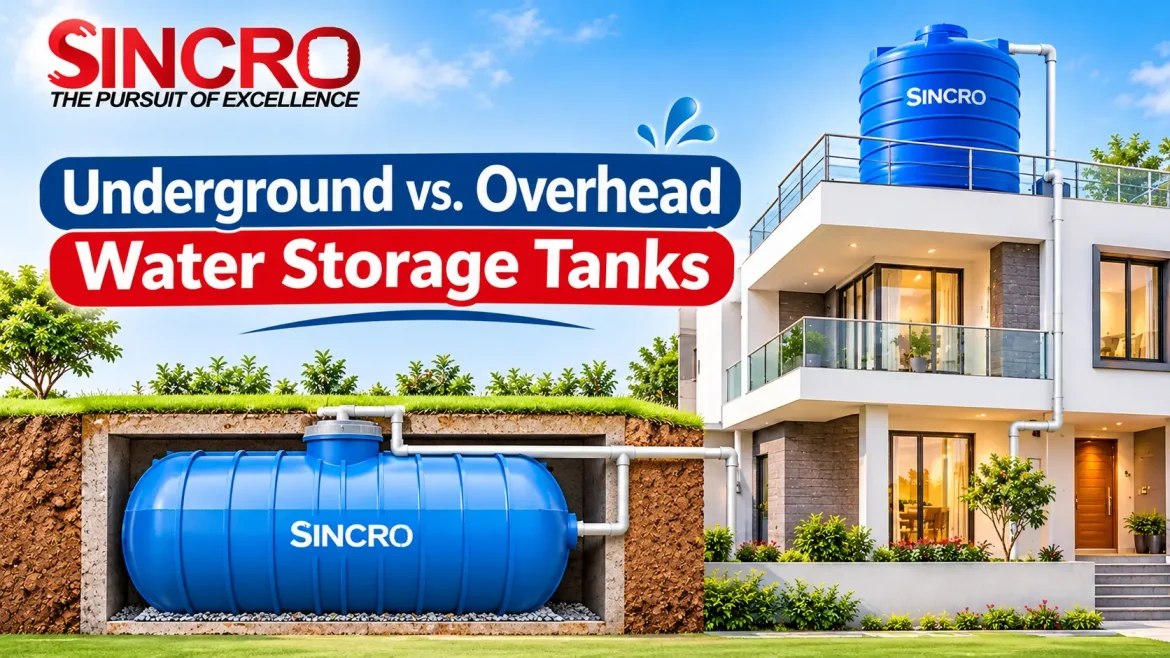
When planning a water storage solution, two popular options are underground and overhead tanks. Both systems serve the same basic purpose, but their installation, maintenance, cost, and performance are quite different. Choosing between them depends on available space, building design, water requirements, and budget.
In this guide, we will compare underground and overhead Water Storage Tanks to help homeowners, builders, and business owners make a practical decision.
1. What Are Underground Water Storage Tanks?
Underground water storage tanks are installed below ground level, usually beneath gardens, parking areas, or open spaces around a property. They are commonly used in residential societies, commercial buildings, factories, and large properties where a significant amount of water needs to be stored.
These tanks are generally made from concrete, reinforced materials, or specially designed plastic. Water is collected from the municipal supply, borewell, or another approved source and stored until it is needed.
One major advantage is that underground tanks do not occupy valuable surface space. They also keep stored water away from direct sunlight, which can help reduce algae growth when the tank is properly sealed and maintained.
However, installation requires excavation, proper structural support, and suitable waterproofing. If the tank develops a crack or leakage, finding and repairing the problem can be difficult.
2. What Are Overhead Water Storage Tanks?
An overhead water storage tank is installed above ground level, generally on rooftops, terraces, or specially designed support structures. It stores water and supplies it to taps, bathrooms, kitchens, and other outlets through gravity.
These tanks are widely used in Indian homes, apartments, offices, schools, and commercial properties. Their simple working system makes them a practical choice for buildings of different sizes.
Modern plastic water storage tanks are available in different shapes, capacities, and designs. Many models are manufactured using durable, UV-stabilised materials that can withstand regular outdoor exposure.
Another benefit is easy access. Users can inspect the tank, clean it, and check for leakage without carrying out major excavation work. However, the building must have enough structural strength to support the weight of a fully filled tank.
Customer Success Story: A Smarter Water Storage Solution for a Growing Home
Customer Name: Aarav – Residential Homeowner, Mumbai
When Aarav planned his new home in Mumbai, managing the daily water supply was one of his main concerns. With limited space around the property and changing municipal water supply timings, he wanted a reliable water storage system that would support his family’s daily needs.
After comparing underground and overhead Water Storage Tanks, Aarav decided to use both systems together. An underground SINCRO water tank was installed to store the main water supply, while an overhead SINCRO tank was added to ensure smooth water distribution throughout the house.
Aarav says, “Having both underground and overhead water storage has made our daily routine much easier. We now have a practical storage arrangement that suits our home’s needs.”
3. Underground vs. Overhead Water Storage Tanks: Key Differences
Both options have their own advantages. Understanding their differences can help you select a system that matches your property’s requirements.
| Comparison Factor | Underground Tank | Overhead Tank |
| Installation | Requires excavation | Installed on a rooftop or support |
| Space | Saves surface space | Requires rooftop space |
| Water supply | Usually needs pumping | Uses gravity |
| Maintenance | More difficult to access | Easier to inspect and clean |
| Initial cost | Can be higher | Generally more affordable |
| Water pressure | Depends on pumping | Depends on tank height |
| Repairs | May require excavation | Usually easier to manage |
The biggest difference is how water reaches the building. Underground systems generally depend on pumps, while overhead tanks can supply water naturally through gravity. This difference can influence electricity consumption, maintenance, and everyday convenience.
4. Advantages and Disadvantages of Underground Tanks
Underground tanks are useful when surface space is limited or when a property needs large water storage capacity.
Advantages:
- They keep open areas free for parking, gardens, and other activities.
- Stored water receives less direct sunlight.
- Larger storage capacities can be planned according to site conditions.
- They are suitable for residential complexes and industrial properties.
Disadvantages:
- Excavation and construction can increase installation expenses.
- Waterproofing and structural design require proper attention.
- Cleaning and inspection may take more effort.
- Groundwater entering through damaged joints can affect water quality.
Before installing an underground tank, check the groundwater level and soil conditions. A qualified professional should assess the design, especially where groundwater pressure or vehicle movement above the tank may create additional structural loads.
5. Advantages and Disadvantages of Overhead Tanks
Overhead tanks are a common choice because they are relatively simple to install and maintain. They also provide a convenient way to distribute water throughout a building.
Advantages:
- Installation is generally quicker and simpler.
- Gravity helps supply water without requiring a distribution pump.
- Cleaning and regular inspection are easier.
- Different capacities are available for homes and commercial buildings.
- Plastic models are lightweight compared with many traditional alternatives.
Disadvantages:
- They occupy valuable rooftop space.
- Direct sunlight may increase water temperature.
- The supporting structure must handle the full tank weight.
- Poorly fitted lids can allow dust, insects, and other contaminants inside.
A good-quality overhead tank should have a secure lid, suitable inlet and outlet connections, and a design that makes cleaning convenient.
6. Which Tank Is More Suitable for Indian Conditions?
Indian weather, building layouts, and water supply conditions can vary considerably. In cities such as Mumbai, Surat, Pune, and Ahmedabad, residential buildings often depend on stored water to manage irregular municipal supply schedules.
For independent houses and smaller commercial properties, overhead tanks are often a convenient option. They provide easy access for cleaning and can be installed in different capacities depending on household consumption.
For large residential societies, factories, hospitals, and commercial developments, underground tanks can provide the main storage capacity. Water can then be pumped into smaller overhead tanks for distribution.
In many buildings, combining both systems is actually the most practical approach. An underground tank stores the main water supply, while an overhead tank ensures convenient distribution across different floors.
People looking for water storage tanks Mumbai options should consider local installation conditions, available space, water demand, and the quality of materials before purchasing.
7. Why Are Plastic Water Storage Tanks a Popular Choice?
Plastic water storage tanks have become a preferred option for many residential and commercial applications. Their lightweight construction makes transportation and installation easier, while modern manufacturing methods allow different sizes and shapes.
When selecting plastic tanks, consider these important features:
Material quality: Choose tanks made from suitable, durable materials intended for water storage. For drinking water, check that the material is certified or approved for potable-water contact under applicable standards.
UV protection: Outdoor tanks should have suitable UV protection to help reduce damage caused by prolonged sunlight exposure.
Tank layers: Multi-layer construction can provide additional protection against sunlight, depending on the manufacturer’s design and material specifications.
Lid and fittings: A tight-fitting lid and good-quality connections help prevent unwanted contamination and leakage.
Reliable water storage tank manufacturers provide product specifications and installation guidance to help buyers select an appropriate model. Before purchasing, compare the material, warranty, capacity, and maintenance requirements rather than choosing only by price.
8. How to Choose the Right Water Storage Tank
Before exploring water storage tanks for sale, consider the following factors:
- Daily water consumption: Estimate how much water your household or business needs each day.
- Available space: Check whether your property has enough rooftop or underground space.
- Building strength: Confirm that the roof can safely support a filled overhead tank.
- Installation budget: Include transportation, plumbing, supporting structures, excavation, and maintenance costs.
- Water quality: Select a covered tank made from suitable materials and clean it regularly.
- Manufacturer reliability: Choose an experienced water storage tanks supplier that provides clear product details, warranty information, and after-sales support.
Taking time to compare these points can prevent unnecessary expenses and help you choose a tank that performs well over the long term.
9. Final Verdict: Underground or Overhead?
There is no single answer that works for every property. Underground tanks are suitable for projects that require larger storage capacity without using valuable surface space. Overhead tanks are often better for homes and smaller buildings because they are easier to install, inspect, and maintain.
For many large properties, using both systems together offers a balanced solution. The underground tank stores the water, and the overhead tank distributes it throughout the building.
The best decision depends on your water requirements, building structure, available space, and long-term maintenance plans. Always consult an experienced professional before finalising the tank location and installation design.
Frequently Asked Questions
1. Is an underground water tank better than an overhead tank?
Neither option is always better. Underground tanks are suitable for larger storage needs and limited surface space, while overhead tanks offer easier maintenance and gravity-based water distribution.
2. How long can water be stored in a plastic water tank?
Water storage time depends on water quality, temperature, tank cleanliness, and storage conditions. Keep the tank covered, clean it regularly, and follow local drinking-water safety guidance. Do not assume stored water remains safe indefinitely.
3. Which water tank is best for a residential building?
For a residential building, a high-quality plastic water storage tank is often a practical choice because it is lightweight, durable, easy to maintain, and available in different storage capacities. SINCRO offers a range of plastic water storage solutions for residential and commercial requirements. You can explore different options, sizes, and product details on the SINCRO Water Storage Tank page to find a suitable tank for your building.
4. Do underground water tanks require regular cleaning?
Yes. Underground tanks need regular inspection and cleaning to remove sediment and prevent contamination. Cleaning frequency depends on water quality and usage, but the tank should be inspected periodically.
5. What should I check before buying a water storage tank in Mumbai?
If you are looking for reliable plastic water storage solutions, SINCRO offers a range of plastic water tanks designed for residential and commercial requirements. Compare available tank sizes, product specifications, and material quality to find the right option for your property.