
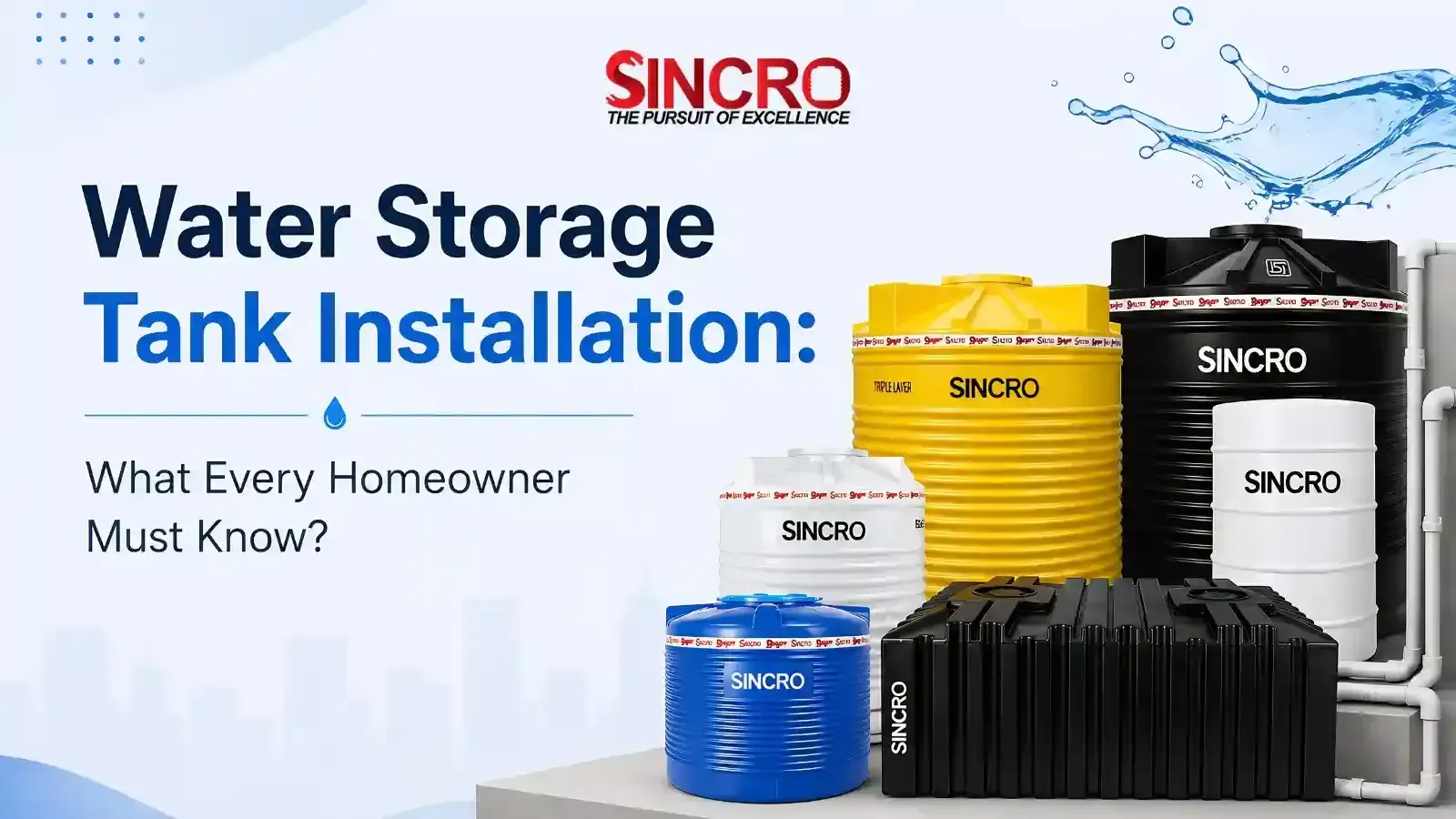
Choosing the wrong water tank can cost you far more than the unit itself, including contamination risks, structural damage, and repeated repairs. Most homeowners only make this decision once, usually under pressure from a dry tap or a failing old unit. Getting it right matters.
Why Your Water Storage Tank Choice Isn’t as Simple as It Looks
A water tank isn’t just a container sitting on your roof. It’s the core of your home’s daily water supply. A poorly chosen or badly installed one can harbour bacteria, crack under heat stress, or fail when demand peaks.
Start with capacity. Indian households typically need 150–200 litres per person per day. For a family of four, that’s a minimum of 1,000 litres, plus a buffer for supply cuts, which are common in cities like Mumbai.
Material is equally important. Food-grade, UV-stabilised polyethylene is the standard for safe residential storage. Sincro water tanks use triple-layer construction, designed to handle heat, resist algae, and hold up over years of daily use without leaching chemicals into your water.
Loft Tank or Vertical Tank: Which One Fits Your Home?
Most homes run on one of two configurations.
A loft water tank is installed overhead and uses gravity to maintain consistent pressure across all floors, no pump required for basic flow. It’s the practical choice for multi-storey homes and areas with frequent power cuts.
A vertical water storage tank sits at ground level or on a raised platform and connects to an electric pump for pressurised distribution. This works better where rooftop structural load is a concern or where larger volumes are needed.
Neither is universally superior; the right pick depends on your layout, plumbing setup, and building load capacity. A qualified installer should assess your home before making any recommendations.
Four Things to Sort Out Before Installation Day
Foundation and support: The base must be level, solid, and rated for the tank’s loaded weight. Water weighs 1 kg per litre; a 1,000-litre tank puts a full tonne on whatever holds it.
Pipe connections: Inlet near the top, outlet at the bottom, and an overflow pipe with mosquito mesh. Poorly placed connections cause airlocks and stagnant water pockets.
Sun exposure: UV-stabilised tanks handle sunlight, but partial shade still extends the product’s lifespan noticeably. Build in shade cover where possible.
Cleaning access: Your tank needs to be emptied and scrubbed every six months. If the installer seals it in a way that makes cleaning impractical, that’s a problem before you even fill it.
For compact storage or backup needs, plastic household drums are a reliable, space-efficient solution for kitchens, utility rooms, and secondary storage points.
Picking Water Storage Suppliers You Can Actually Trust
Reputable water storage manufacturers use BIS-certified materials, maintain consistent wall thickness, and back their products with real warranties. Budget suppliers often cut corners that only become visible as cracks and leaks 12–18 months later.
Sincro is among the established water storage suppliers serving homeowners across India, including Mumbai, with tanks engineered for long-term performance. Contact their team to get guidance on sizing, placement, and the right tank type for your setup.
FAQ
1. How do I calculate the right tank size?
Multiply household count by 150–200 litres per person, then add 20% buffer. Four people typically need at least 1,000 litres.
2. What’s the difference between a loft and a vertical tank?
Loft tanks use gravity; no pump needed. Vertical tanks pair with pumps and suit homes with limited rooftop space or load constraints.
3. How frequently do I need to clean my tank?
You should clean the tank every six months. Empty it, scrub with soap and water, rinse, and disinfect before refilling.
4. Are plastic tanks safe for drinking water?
Yes, when made from food-grade BIS-certified polyethylene. Quality water storage manufacturers like Sincro build tanks that resist leaching under normal household conditions.
5. Can I install a water tank myself?
Ground-level setups are manageable with experience. Loft or rooftop installations need professional structural calculations, and sealed connections aren’t worth risking on a DIY attempt.